
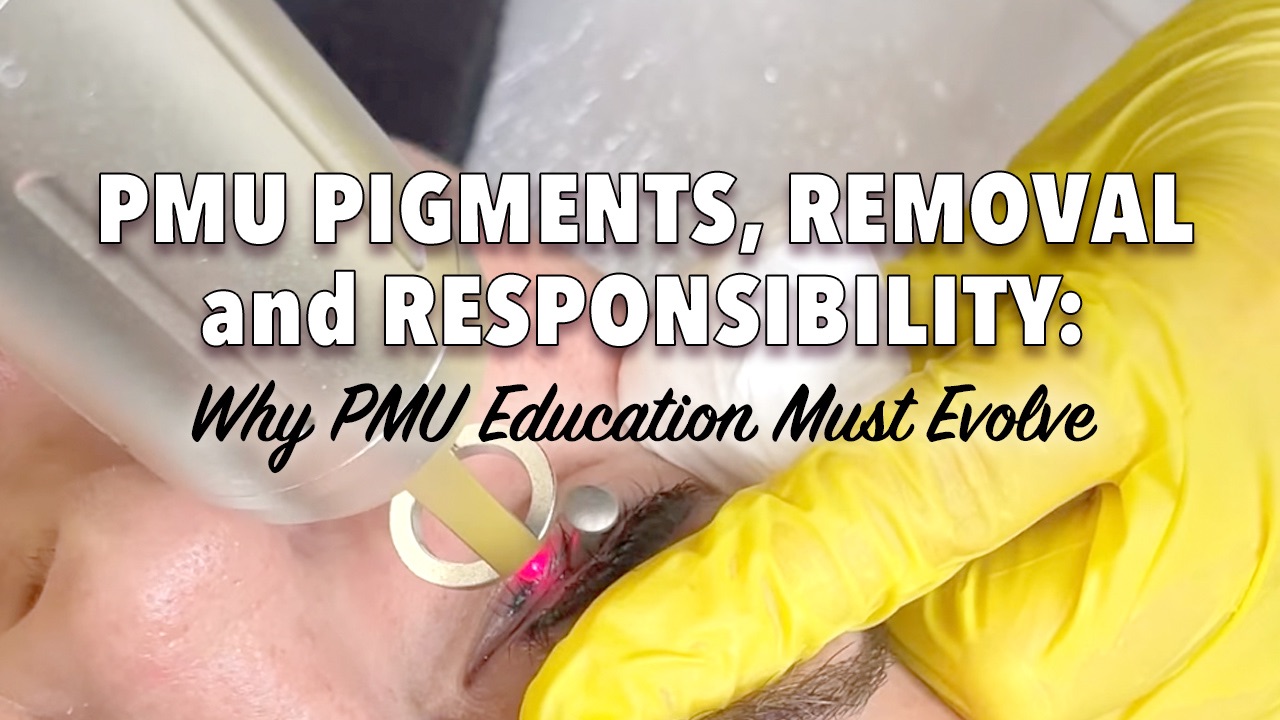
Pigments, Removal and Responsibility: Why PMU Education Must Evolve
Feb 06, 2026The permanent makeup industry isn't collapsing, it's correcting itself.
More artists are questioning pigments.
More clients are asking about removal.
More educators are being challenged.
And for the first time in a long time, the industry is being forced to confront something uncomfortable but necessary:
👉 Technique alone is not enough anymore.
In Tatter-a-fact Podcast episode #121, Teryn Darling and internationally respected PMU educator Alex Mechenici dive into the realities behind pigment behavior, removal challenges, and long-term responsibility in permanent makeup.
This conversation isn't about fear.
It's about maturity, accountability, and evolution.
The PMU Industry's Wake-Up Call
For years, permanent makeup education focused primarily on:
- Speed and efficiency
- Saturation and visibility
- Social media-ready results
- Trend-driven techniques
What it often failed to address was:
❌ Pigment chemistry
❌ Skin behavior over time
❌ Ingredient interaction
❌ Removal limitations
❌ Long-term client outcomes
As a result, many artists now find themselves facing:
- Unexpected color shifts years later
- Pigments that don't respond easily to laser or saline
- Confusion around why results aged the way they did
This isn't because artists are careless.
It's because education stopped too soon.
Removal Is Not a Failure, It's a Responsibility
One of the most important reframes discussed in Episode 121 is this:
Removal does not mean PMU failed. Ignorance does.
Laser removal and saline removal are not enemies of permanent makeup. They are tools, necessary tools, when clients want change, correction, or reversal.
Problems arise when:
- Pigments are chosen without understanding ingredients
- Saturation exceeds what the skin can support long-term
- Depth control is inconsistent
- Artists are never taught how pigments behave years later
Advanced PMU education must include removal awareness, even if the artist never plans to offer removal themselves.
If you tattoo skin, you are responsible for understanding:
✔ What happens if a client changes their mind
✔ What ingredients are harder to break down
✔ What limitations exist with removal technologies
Responsibility doesn't mean fear, it means informed consent and smarter decisions.
Pigment Science: Where Education Often Falls Short
Many PMU artists are taught what pigments to use, but not why.
Understanding pigment science means understanding:
- Colorant types (iron oxides, organics, hybrids)
- Particle size and density
- Carrier fluids and delivery systems
- How pigments interact with skin layers
- How the immune system responds over time
This is why two artists using the same pigment can achieve completely different long-term results.
Pigment behavior is influenced by:
- Depth of implantation
- Saturation level
- Skin type and condition
- Environmental exposure
- Ingredient combinations
Without this knowledge, artists are left guessing, and guessing has consequences.
Healed Results vs. Aged Results: The True Measure of Skill
A healed result shows what happened today.
An aged result reveals:
- Your understanding of skin
- Your pigment choices
- Your depth control
- Your long-term decision-making
Advanced artists do not judge success by:
- Fresh photos
- Immediate saturation
- One-year touch-ups
They judge success by:
✔ How pigments fade
✔ Whether color shifts are predictable
✔ Whether the skin remains healthy
✔ Whether the client still has options years later
This is why aged results are the real marker of mastery and why education must extend beyond the initial procedure.
Why "No Pigment is Bad" But Misuse Is Dangerous
One of the most important takeaways from Episode 121 is this:
There is no single ingredient that is inherently bad.
Not carbon black.
Not titanium dioxide.
Not iron oxides.
Not yellow pigments.
Problems occur when artists:
- Use pigments outside their intended purpose
- Over-saturate without understanding limits
- Ignore skin type considerations
- Rely on marketing instead of education
Fear-based pigment choices lead to confusion.
Education-based choices lead to confidence.
Critical Thinking: The Skill Every PMU Artist Needs
The future of PMU does not belong to artists who:
-
Chase trends
-
Switch pigment lines constantly
-
Copy Instagram techniques blindly
It belongs to artists who:
✔ Ask why
✔ Study fundamentals
✔ Understand cause and effect
✔ Take responsibility for long-term outcomes
Critical thinking is what separates:
-
Technicians from professionals
-
Short-term success from longevity
-
Trend followers from industry leaders
This is the foundation of advanced PMU education.
Why the Girlz Ink Academy Exists
The Girlz Ink Academy was built on the belief that:
-
Education should evolve with the industry
-
Artists deserve real answers, not hype
-
Responsibility is part of mastery
-
Longevity matters more than trends
Academy education emphasizes:
✔ Pigment science
✔ Skin anatomy
✔ Depth control
✔ Aged outcomes
✔ Ethical decision-making
This is not fast education.
This is foundational education.
Continue the Conversation
🎧 Listen to Tatter-a-Fact Podcast Episode 121 for the full conversation with Alex Mechenici.
🛍 Explore the Girlz Ink Store for products backed by education—not marketing.
🎓 Deepen your understanding through structured, science-based courses inside the Academy.
The future of PMU belongs to educated artists who think beyond today’s results.

