How to Choose a Permanent Makeup Course for Your Experience Level
Nov 06, 2026You can finish a PMU course and still have questions about what you are doing in the skin. You can also have years behind you and realize there is something you were never taught properly. Both are good reasons to look for more education. The question is which education will actually help.
If you are figuring out how to choose a permanent makeup course, start with the decisions you need to understand or the skill you need to develop. Match that need to the curriculum, the expected starting level, and the way your work will be evaluated. Then look at whether the format, support, and practice requirements fit your situation.
The course with the most impressive fresh photos may not be the course you need next. Before you enroll, get specific about what you want to be able to do when you finish.
Start with the problem you want the course to help you solve
Write down the question that keeps coming up in your work or practice. Be honest about it.
"I want to get better at brows" is a starting point. "I do not understand why my healed color looks cooler than I expected" gives you something you can use to evaluate a syllabus.
Maybe you copy your instructors needle choice because you do not know how to choose one yourself. Maybe your practice strokes look inconsistent, or you want to add a procedure you have never performed. Those needs call for different education.
Try finishing this sentence: "After this course, I want to be able to explain or demonstrate ?????." If you cannot find that subject in the course outline, ask the provider before you buy.
If you are new to PMU look for a complete beginner training path
Starting from zero requires more than a demonstration of one brow technique. Look for education that covers skin, infection control, client assessment, color and pigment selection, needles, machine use, design, aftercare, and evaluation of healed work. Ask how practical skills are taught and assessed.
A focused subject course can be part of your education. You still need to know what the rest of your training path includes. A color theory class, for example, can help you understand pigment decisions without teaching every skill needed to perform a procedure.
Before enrolling, confirm what your local regulator requires for the work you plan to do, including any supervised practice or model work. The FDA explains that the practice of tattooing is regulated by local jurisdictions. Ask your insurer about its training requirements, too. A course certificate does not automatically authorize you to take clients.
If you need the broader starting path, read How to Become a Permanent Makeup Artist. For the credential questions, see PMU Certification vs Licensing.
If you already work on clients use your healed results to choose
Being busy does not mean every part of your foundation is solid. You might be comfortable creating a shape and still feel uncertain about pigment selection or how to adjust your technique.
Look at your procedure notes alongside your healed photos What can you explain? Where are you guessing? If a client returns with patchy retention, do you know what information to review before changing your pigment or needle?
You do not have to diagnose every result alone. Bring those questions to a qualified instructor and ask whether the course addresses them. A focused theory course may be more useful than another full procedure demonstration when the missing piece is understanding a particular decision.
For example, Beyond The Epidermis covers color theory, pigment behavior, and skin undertones. The Needle and The Prick focuses on needle characteristics and selection. Machine and Movements includes machine handling, movements, and the relationship between hand and machine speed.
Choose the subject your work is asking you to understand. Taking a fundamentals course after years in PMU can give you the explanation you have been missing.
If you want to add a specialty check what the course expects you to know
Experience with one procedure does not tell you everything you need to know about another. Before choosing nano brow, eyeliner, saline removal, or paramedical training, ask which skills you should already have and what additional practice the course expects.
Read the actual prerequisites. Do not assume that a course labeled "advanced" fits you because you have been tattooing for several years. Ask whether it addresses the techniques, tissue assessment, and decisions involved in the service you want to add.
Girlz Ink Academy offers focused education such as NanoLines machine hair stroke training with Mary Ritcherson, Li-FT Saline Lightening, and scar camouflage training with Sherah Juarez. Compare each course with your existing education and the requirements for that service before enrolling.
You should be able to identify what the course teaches and what you will still need help learning afterward.
Look for an instructor who explains the decisions
Ask to see healed work, with enough context to understand what you are looking at. A fresh result and a healed result show different stages. Neither a beautiful photograph nor a large following tells you how well someone can teach.
Pay attention to the explanations. Does the instructor discuss why they selected a pigment, changed a needle configuration, or chose a particular approach for that client? Do they explain when they would decline a case or refer it elsewhere?
Student work can be useful, too. Ask what level those students started at and what feedback they received. One impressive result does not tell you what support every student gets.
Know what practice and feedback are included
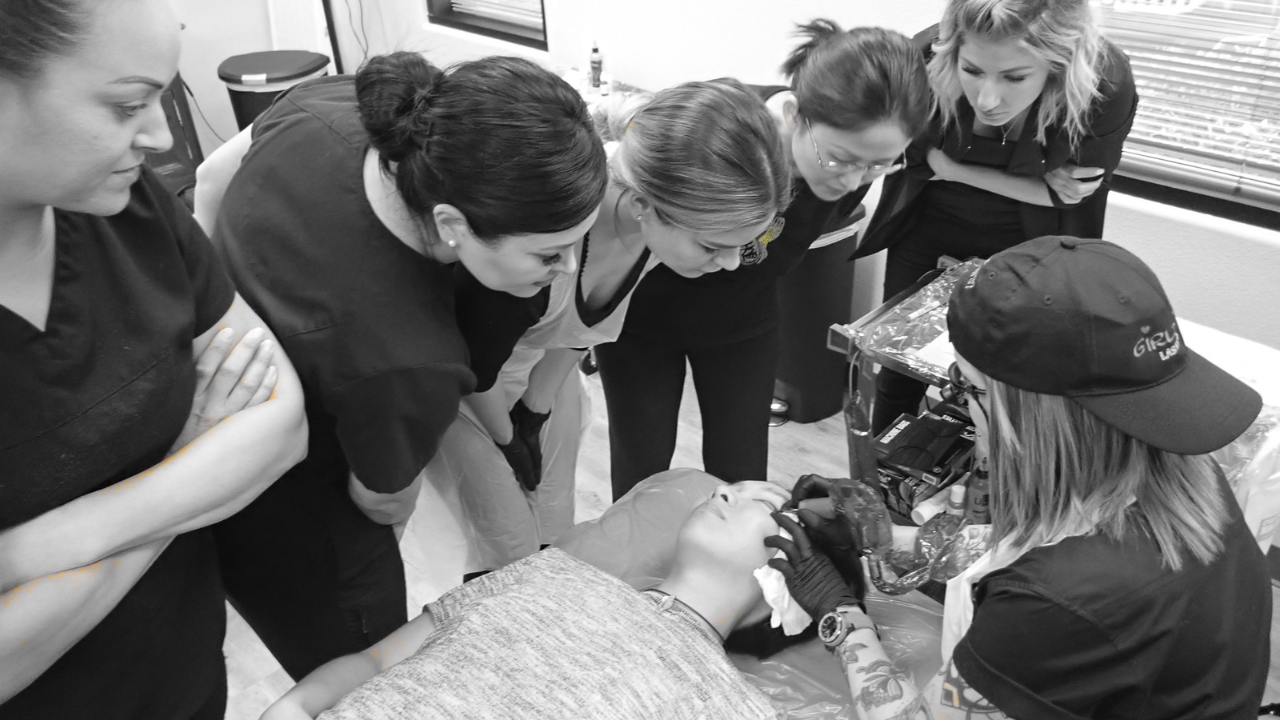
Watching a demonstration can help you understand a procedure. You also need a way to find out whether you are applying what you learned correctly.
Before paying, ask how students practice, who reviews their work, and whether feedback is individual or general. If there is model work, find out who supervises it and how it fits local requirements. Ask what happens when a student needs more practice before meeting the course's standard.
Online education can give you time to pause, repeat, and study. It does not automatically include a review of your own work. Hands-on training can provide direct observation, but the amount of individual guidance still depends on how the class is run. Check the details of the specific course.
Compare the full commitment before you enroll
Tuition is only part of the decision. Find out what equipment and practice materials you need, how long you can access the lessons, and whether assessments or renewals carry additional costs. Read the refund and cancellation terms before purchasing.
Be realistic about your time. If you are fitting education around clients or family, look at the lesson structure and practice expectations. A course is harder to use when you cannot make time to work through it.
Ask what "support" means. Is there a way to ask questions? Who answers? Does support include feedback on your work, and for how long? Get those answers while you are comparing courses.
Questions to ask before choosing a permanent makeup course
Use these questions to compare your options:
- Who is the course designed for, and what experience does it assume?
- Which part of the curriculum addresses the skill or question I need help with?
- Can I see relevant healed instructor work and understand its context?
- How will I practice, and who will evaluate my work?
- What must I complete to receive the certificate?
- What support, access time, and materials are included?
- What other training or supervised practice will I need?
- Does this fit the requirements where I plan to work?
A provider should be able to give you clear answers or explain what is outside the course's scope.
Choose the course you can put to use
You do not have to learn every specialty at once. Start with the question you cannot answer or the skill you cannot yet demonstrate. Find the education that addresses it, make time to practice, and get feedback on what you are doing.
If your next step is strengthening the basics, explore the Girlz Ink PMU fundamentals courses. If you have a specific service in mind, browse the Girlz Ink Academy course options and read the outline before choosing. When you are unsure, tell the team what training you have completed and what you want help learning next.
Frequently asked questions
What should a beginner look for in a permanent makeup course
Look for a clear beginner curriculum, practical training and assessment, instruction in safety and client suitability, and a way to ask questions. Confirm how the course fits your local requirements and what additional training you need before working on clients.
Do experienced PMU artists still need fundamentals courses
They can. If you struggle to explain pigment behavior, needle selection, or the choices behind a healed result, focused fundamentals education can address that gap. Choose according to what you need to understand, rather than how long you have been practicing.